Monday, January 26, 2026
No menu items!
Home Blog Page 8

NATO Chief Backs Trump’s Decision to Withhold Tomahawks from Ukraine

0

Key Takeaways

  • NATO Praises Trump’s Restraint: Secretary-General Mark Rutte said Trump was “completely right” to delay sending Tomahawk missiles to Ukraine, citing the year-long training required to operate them effectively.
  • Focus Shifts to Economic Pressure: Both leaders agreed that intensifying sanctions and economic pressure on Russia will do more to change Putin’s behavior than rushed weapons transfers.
  • Sanctions Hit Russia’s Oil Giants: The Trump administration sanctioned Rosneft and Lukoil, Russia’s largest oil firms, as part of a broader strategy to cut off funding for Moscow’s war machine.

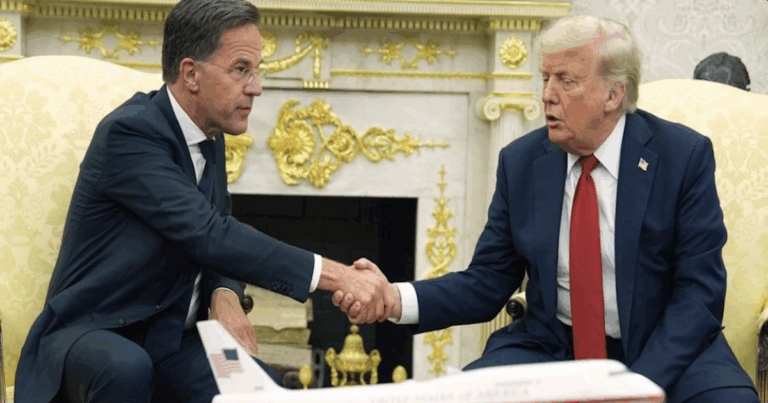
NATO Secretary-General Mark Rutte is backing President Donald Trump’s decision to hold off on sending Tomahawk missiles to Ukraine, calling the move both practical and strategically sound.

Speaking with CNN after his White House meeting with the president, Rutte said Trump was “completely right” to point out the logistical hurdles in deploying the U.S. Navy’s advanced cruise missiles to a foreign force mid-war. “It takes months for anyone other than American soldiers to be trained on them,” Rutte explained. “It is not that if you decide today, Ukrainians can use them tomorrow.”

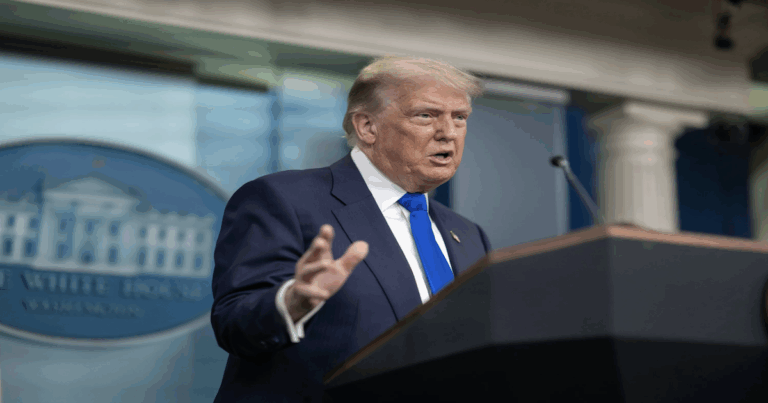
Trump told reporters the Tomahawk’s complexity is precisely what makes it such a potent weapon — and a poor fit for Ukraine’s immediate needs. “It takes a year of intense training to learn how to use it,” Trump said from the Oval Office. “We know how to use it, and we’re not going to be teaching other people. It will be too far out into the future.”

Instead, Trump and Rutte emphasized economic pressure as the most effective way to squeeze the Kremlin. “You see that when Putin feels under threat, he starts to react,” Rutte said, noting Russia’s struggling economy.

On Wednesday, the Trump administration sanctioned Russia’s two largest oil companies — Rosneft and Lukoil — cutting off key revenue streams funding the war. Trump also canceled a planned meeting with Vladimir Putin in Budapest, saying, “It just didn’t feel right to me.”

With NATO’s backing, Trump’s strategy is clear: keep the pressure on Moscow without dragging America into another endless conflict.
Dem Strategy Exposed: “Families Will Suffer — That’s Our Leverage”

0

Key Takeaways

  • Democrats Admit Using Suffering as Leverage: House Democrat Katherine Clark confessed that “families are going to suffer,” calling it “leverage” in budget negotiations — a shocking admission of political cruelty.
  • Real Americans Are Paying the Price: While Democrats play power games, over a million federal workers are missing paychecks, airports are facing delays, and small businesses are struggling.
  • Trump Acts, Democrats Obstruct: President Trump continues taking steps to protect service members and essential programs, while Democrats double down on gridlock and chaos to score political points.

Democrats are once again showing America where their priorities lie — and it’s not with the people who keep this country running.

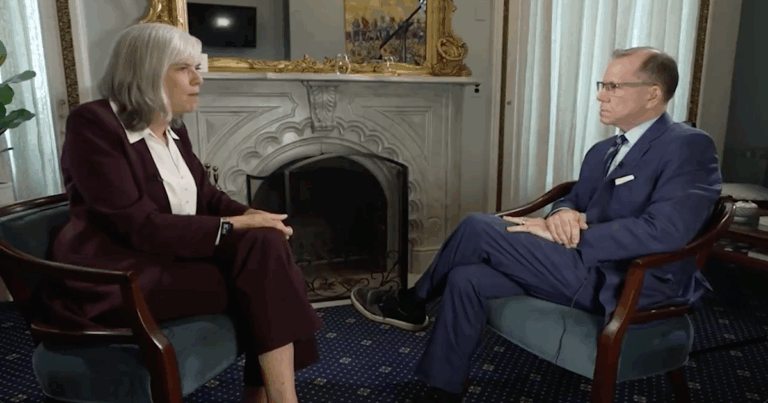
As the government shutdown drags on, top House Democrat Katherine Clark openly admitted that Americans’ suffering is nothing more than a political tool. “There will be families that are going to suffer… but it is one of the few leverage times we have,” Clark said. Translation: the pain of everyday Americans is a bargaining chip for the Left’s political ambitions.

More than a million federal employees are without pay. Small businesses are struggling. Airports are facing delays. Families relying on food assistance are left hanging. Yet Democrats seem proud of the chaos they’ve caused.

Senate Democrats are even bragging about it. Chuck Schumer gloated, “Every day gets better for us.” Bernie Sanders warned against reopening the government because it would “lose our leverage.” A senior Democrat aide reportedly admitted their strategy won’t change “short of planes falling out of the sky.”

Meanwhile, President Trump is working to ensure the essentials remain intact — from protecting pay for service members to keeping vital nutrition programs funded. The administration is taking real action while Democrats hold the economy hostage.

This isn’t about honest debate or fiscal responsibility. It’s a cynical power grab at the expense of hardworking Americans. Democrats are betting that the more pain they cause, the more political capital they gain. But Americans aren’t buying it — and they’ll remember exactly who cheered their suffering when the dust settles.

Trump Administration Sanctions Russia’s Top Oil Firms to Starve War Machine

Key Takeaways

  • Major Sanctions Target Kremlin Revenue: The Trump administration sanctioned Rosneft and Lukoil — Russia’s two biggest oil producers — freezing assets and cutting off key revenue streams funding the war in Ukraine.
  • Pressure for a Ceasefire: Treasury Secretary Scott Bessent and President Trump both urged an immediate ceasefire, saying the sanctions aim to force Putin to the negotiating table and stop the bloodshed.
  • America Leads with Economic Power: Authorized under Executive Order 14024, the sanctions highlight the administration’s strategy of using financial strength and energy leverage — not endless war — to secure peace and protect U.S. interests.

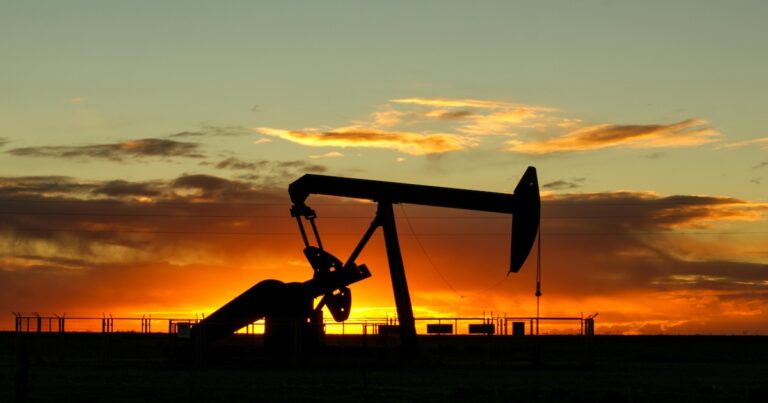
The Trump administration is tightening the screws on Moscow’s energy empire. On Wednesday, the Treasury Department announced sweeping sanctions against Russia’s two largest oil producers, Rosneft and Lukoil, in a move aimed at cutting off the financial lifeline fueling the Kremlin’s war in Ukraine.

Treasury Secretary Scott Bessent said the sanctions target the oil giants that “fund the Kremlin’s war machine,” adding that the administration will “take further action if necessary to support President Trump’s effort to end yet another war.” The sanctions freeze assets tied to dozens of subsidiaries under both companies and restrict U.S. entities from engaging in transactions with them.

“Now is the time to stop the killing and for an immediate ceasefire,” Bessent said in a statement, urging global allies to adopt similar measures.

President Trump confirmed he canceled a meeting with Vladimir Putin, citing the need for stronger leverage. “It just didn’t feel right,” Trump said during an Oval Office press event with NATO Secretary General Mark Rutte. “They’re massive sanctions — among the biggest in the world — and hopefully it’ll push [Putin] to become reasonable.”

The sanctions are authorized under Executive Order 14024 and reflect the administration’s broader strategy to isolate Russia’s economy, particularly its lucrative energy exports.

“The United States will continue to advocate for a peaceful resolution to the war,” the Treasury said in its statement. “A permanent peace depends entirely on Russia’s willingness to negotiate in good faith.”

For now, the message is clear: America’s economic power remains one of its most effective tools for peace.

Trump Expands White House Legacy on His Own Dime

0

Key Takeaways

  • Privately Funded Project: The new White House ballroom is being built without taxpayer dollars, reinforcing President Trump’s commitment to fiscal responsibility and private-sector initiative.
  • Continuing Presidential Tradition: From Roosevelt’s West Wing to Kennedy’s Rose Garden, nearly every president has improved the White House. Trump’s ballroom continues that legacy of modernization and national pride.
  • Designed for Diplomacy and Legacy: The addition will expand the Executive Mansion’s capacity to host world leaders and formal events — a space reflecting America’s strength, elegance, and enduring leadership on the world stage.

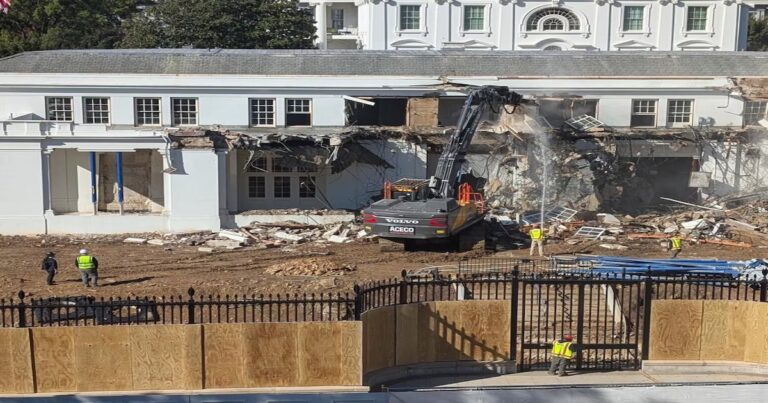
The media meltdown over President Donald J. Trump’s latest White House project says more about their obsession with outrage than about the actual improvement underway. The president’s new ballroom — a privately funded, grand addition to the Executive Mansion — is part of a long, proud tradition of presidents enhancing America’s most iconic home to meet the needs of a growing and modern nation.

The ballroom, which will expand the White House’s ability to host foreign leaders, major state functions, and official ceremonies, continues a 200-year legacy of architectural innovation. From Theodore Roosevelt’s 1902 addition of the West Wing to Harry Truman’s complete interior reconstruction in 1948, presidents have routinely updated the building to reflect both the times and the country’s place in the world.

“Fake News” outlets have tried to frame Trump’s ballroom as excessive or self-indulgent. But in reality, the project — funded without taxpayer dollars — stands as a testament to private initiative and American craftsmanship. It’s a venue designed not for vanity, but for diplomacy and celebration of American excellence.

Past presidents have added everything from bowling alleys and swimming pools to tennis pavilions and basketball courts. Trump’s addition, true to form, is a statement of elegance and strength — a space meant to represent the dignity of the presidency and the grandeur of the United States.

While critics whine, the ballroom joins a long list of White House upgrades that underscore one truth: every generation of leadership leaves its mark on the People’s House. Trump’s legacy will be no different — bold, functional, and unapologetically American.

Trump Warns of Economic Fallout if Supreme Court Strikes Down Tariffs

Key Takeaways

  • Supreme Court Showdown: The Supreme Court will soon hear Learning Resources v. Trump, a case that challenges the president’s authority to impose tariffs under the International Emergency Economic Powers Act.
  • Tariffs as Economic Engine: Trump credits his tariff strategy for driving $17 trillion in new U.S. investments and reshoring key industries like pharmaceuticals, semiconductors, and autos.
  • National Security Argument: The president warns that stripping his tariff powers would weaken national security and hand control of trade back to foreign nations that “have taken advantage of us for years.”

President Donald Trump is warning that if the Supreme Court strikes down his use of tariffs, the U.S. economy could face years of hardship. Speaking on Fox News’ “Sunday Morning Futures,” Trump said the Court’s ruling on the constitutionality of his international economic emergency tariffs will determine whether America continues its current streak of record investment and job growth.

“If we win the tariff case, which hopefully we will, it’s vital to the interests of our country. We’re the wealthiest country there is. If we don’t, we’ll be struggling for years to come,” Trump said.

At issue is whether Trump’s use of the International Emergency Economic Powers Act (IEEPA) gives the president the authority to impose tariffs in the name of national security. Several small businesses have challenged the measure, arguing it oversteps executive power. Lower courts sided against the administration, prompting an appeal to the Supreme Court.

Trump defended tariffs as the cornerstone of his economic strategy, crediting them for bringing back manufacturing and investment to American soil. “The pharmaceuticals are coming back already, again tariffs. So essentially, I’m putting tariffs on pharmaceuticals unless they’re made here,” he said.

The president said the U.S. has seen $17 trillion in new investments within his first eight months in office, calling it “a miracle.” He warned that removing his tariff authority would strip America of economic leverage and threaten national security.

The Supreme Court is scheduled to hear oral arguments in Learning Resources v. Trump on November 5.

Ohio Steelmaker Steps Up in the Fight for U.S. Mineral Independence

0

Key Takeaways

  • Domestic Production on the Horizon: Cleveland-Cliffs announced plans to explore rare earth mineral production at two U.S. sites in Michigan and Minnesota, aligning with President Trump’s resource independence strategy.
  • National Security and Economic Strength: CEO Lourenco Goncalves said the company has an “obligation” to reduce U.S. dependence on China for critical materials vital to defense, tech, and manufacturing.
  • Trade Tensions Rising: The move comes as Trump considers new tariffs against China after Beijing threatened to restrict rare earth exports — a decision the president called “sinister and hostile.”

Cleveland-Cliffs, one of America’s largest steelmakers, is stepping into the rare earth minerals arena as China tightens its grip on global supply chains. The Ohio-based company announced during its quarterly earnings call Monday that it plans to explore domestic production at sites in Michigan and Minnesota — a move aligning with President Donald Trump’s push for U.S. resource independence.

“Beyond steelmaking, the renewed importance of rare earths has driven us to re-focus on this potential opportunity at our upstream mining assets,” said Cleveland-Cliffs CEO Lourenco Goncalves. “It is our obligation to do so as a company with our geological footprint.”

Goncalves said geological surveys at both sites show promising indicators of rare earth mineralization, and that the company’s entry into the field is about ensuring America’s industrial security. “American manufacturing shouldn’t rely on China or any foreign nation for essential minerals, and Cliffs intends to be part of the solution,” he added.

The timing is no accident. China recently signaled plans to tighten export controls on rare earths in response to U.S. tariffs, a move Trump called “sinister and hostile.” In turn, the administration has accelerated efforts to onshore critical materials essential to defense, tech, and manufacturing.

Treasury Secretary Scott Bessent confirmed Trump is open to meeting Chinese President Xi Jinping later this month to discuss trade and mineral policy, though U.S. Trade Representative Jamieson Greer told FOX Business the imbalance remains stark. “This is the last time we want to be talking about rare earths with the Chinese,” Greer said.

For Cleveland-Cliffs, the pivot isn’t just business — it’s about strengthening America’s economic backbone and ensuring the nation never again relies on Beijing for its industrial future.

Trump, Albanese Ink $8.5B Deal to Break China’s Grip on Critical Minerals

Key Takeaways

  • Strengthening Supply Chains: The U.S. and Australia will jointly invest $8.5 billion to boost mining, refining, and recycling of critical minerals essential for defense, energy, and high-tech manufacturing.
  • Countering China’s Control: The deal directly challenges China’s dominance in rare earth production, securing American access to vital resources and stabilizing global supply chains.
  • Expanding Economic and Defense Ties: Alongside the minerals deal, Australia committed billions in U.S. defense purchases and investments—deepening economic cooperation and bolstering Western security.

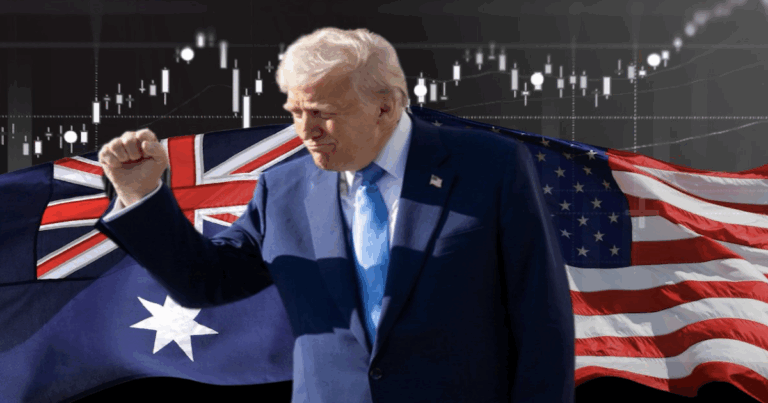
President Donald Trump and Australian Prime Minister Anthony Albanese signed a landmark $8.5 billion critical minerals deal at the White House on Monday, marking a major step in countering China’s global dominance over rare earth production.

The agreement establishes a framework for the U.S. and Australia to jointly invest in mining and processing critical minerals essential for advanced technology, defense, and energy manufacturing. The two nations will each contribute $1 billion in the next six months, with the total value of recoverable resources estimated at $53 billion.

“In about a year from now, we’ll have so much critical mineral and rare earths that you won’t know what to do with them,” Trump said. “This deal unleashes American energy, strengthens our national security, and brings manufacturing back home.”

As part of the deal, both countries agreed to streamline permitting for mines and refineries, establish a price floor for critical minerals, and cooperate on resource mapping and recycling. The U.S. Export-Import Bank will issue over $2.2 billion in financing to support projects advancing supply chain security.

The U.S. Department of War will fund the construction of a gallium refinery in Western Australia to bolster America’s self-reliance in critical minerals processing.

The agreement also deepens defense cooperation, with Australia purchasing $1.2 billion in Anduril unmanned underwater vehicles and $2.6 billion in Apache helicopters. Canberra has committed an additional $2 billion to strengthen missile defense systems and the U.S. submarine industrial base.

Trump framed the agreement as a cornerstone of his broader “energy dominance” agenda — one that leverages American innovation, restores supply chain independence, and promotes fair, reciprocal trade. “For decades, politicians let China control the market,” he said. “Those days are over.”

Together, the U.S. and Australia are forging what Trump called “a new era of prosperity and power built on freedom, not dependency.”

Trump Marks Forest Products Week with Push to Boost U.S. Timber Production

Key Takeaways

  • Economic Growth Through Forestry: President Trump praised the U.S. forest industry for generating hundreds of billions annually and supporting millions of American jobs.
  • Cutting Red Tape: Trump touted new executive orders to increase timber production, streamline environmental rules, and reduce dependence on foreign imports.
  • Conservation and Prosperity: Through his Make America Beautiful Again Commission, Trump emphasized that strong forest management and economic growth can go hand in hand.

President Donald J. Trump marked National Forest Products Week with a message celebrating America’s forests as both an economic powerhouse and a national treasure — and reaffirmed his commitment to cutting red tape that hinders domestic production and job growth.

“America’s forests are a source of strength for our economy and a reflection of our Nation’s natural beauty,” Trump said in a statement released Monday. “They provide the abundant resources that sustain jobs, build communities, and enrich our lives.”

The forest products industry generates hundreds of billions of dollars annually, supporting millions of American jobs from lumber mills to manufacturing plants. Trump praised the workers who serve as “stewards of our forests and drivers of American prosperity,” emphasizing that his administration’s policies are aimed at empowering them, not restricting them.

Earlier this year, Trump signed executive orders to increase domestic timber production, reduce wildfire risk through improved forest management, and cut dependence on foreign timber imports. He also established the “Make America Beautiful Again Commission” — a public-private initiative designed to conserve America’s natural resources, streamline environmental regulations, and expand access to public lands and waters.

The president said these steps are part of a broader push to “reverse the barriers imposed by the previous administration that crushed our economy and stifled innovation.”

In his message, Trump reaffirmed his signature approach to environmental policy: balance conservation with economic growth. “This week,” he concluded, “we renew our pledge to preserve our Nation’s rich resources and bountiful treasures for generations to come.”

AWS Outage Temporarily Knocks Out Major Websites

0

Key Takeaways

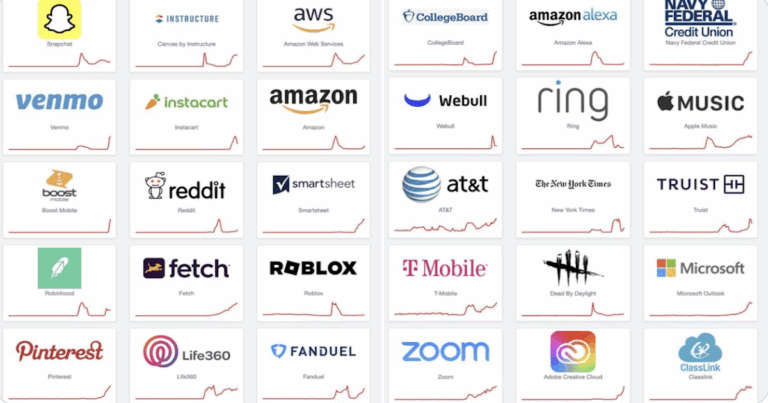
  • Major Disruptions Across the Web: An early-morning Amazon Web Services outage disrupted major apps and platforms including Fortnite, Snapchat, Canva, and Coinbase.
  • Root Cause and Recovery: AWS cited a DNS issue in its US-EAST-1 region but said by 6:35 a.m. ET that the problem was “fully mitigated,” though some throttling continued during recovery.
  • Concerns Over Cloud Concentration: The outage reignited debate about the tech industry’s reliance on a handful of cloud providers — and the risks that come when one of them stumbles.

Several major websites and apps — including Fortnite, Snapchat, Canva, and Coinbase — experienced widespread disruptions early Monday as Amazon Web Services (AWS) suffered a major outage.

Amazon confirmed the issue around 3 a.m. ET, citing “increased error rates and latencies” across multiple services in its US-EAST-1 region, one of its most heavily used data hubs. By 6:35 a.m., the company said the “underlying DNS issue has been fully mitigated,” though it warned that “some requests may be throttled while we work toward full resolution.”

The outage briefly crippled parts of the internet, affecting gaming, social media, design tools, and even financial trading platforms. AI startup Perplexity, crypto exchange Coinbase, and trading app Robinhood all confirmed AWS-related disruptions, while Canva posted on X that its cloud provider was “currently experiencing problems.”

“It’s not the experience we want for you,” Canva wrote. “We’re working closely with them to help re-establish service.”

The incident marks the most significant internet disruption since the 2024 CrowdStrike malfunction that brought down systems at banks, hospitals, and airports around the world.

AWS, which powers everything from e-commerce and streaming to artificial intelligence, remains the backbone of the modern web — a reminder that when it sneezes, much of the digital economy catches a cold.

By mid-morning, most services were recovering, but the outage renewed questions about the concentration of cloud infrastructure among a few tech giants. As one cybersecurity analyst told Fox Business, “When half the internet runs on one company’s servers, even a hiccup can shake the global economy.”