Wednesday, January 28, 2026
No menu items!
Home Blog Page 46

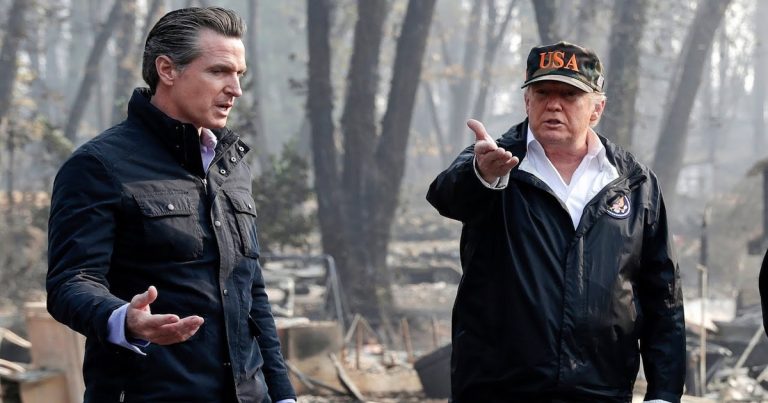
Newsom Pledges $101M for Low-Income Housing Near Palisades Fire Zones

0
  • Newsom announces $101 million for low-income multifamily housing in LA wildfire zones
  • Funding prioritized for areas near the Eaton, Hughes, and Palisades fire perimeters
  • Projects must favor wildfire victims, the homeless, or ex-inmates—and increase density near transit

The Center Square reports:

Six months after the devastating Palisades and Eaton fires, California Gov. Gavin Newsom unveiled $101 million in funding Tuesday for “multifamily low-income housing development” that will “contribute to a more equitable and resilient Los Angeles.” The priority is for “geographic proximity to the fire perimeters of the Eaton, Hughes, and Palisades fires.”

Earlier this year, The Center Square broke news that California state law and a local Los Angeles ordinance require fire-destroyed rent-protected housing — which includes all apartments in the city built before October 1978 — be replaced with low-income housing. Because the affordability requirements use county-level income data, not more local incomes, definitions for “low” and “very low” income housing reflect much lower incomes than the norm for the affluent Palisades community.

“Thousands of families – from Pacific Palisades to Altadena to Malibu – are still displaced, and we owe it to them to help,” said Newsom in a statement. “The funding we’re announcing today will accelerate the development of affordable multifamily rental housing so that those rebuilding their lives after this tragedy have access to a safe, affordable place to come home to.”

The California Department of Housing and Community Development’s Notice of Funding Availability for the $101 pool details how funding will be awarded.

“The 2025 wildfires in Los Angeles County have intensified the region’s longstanding housing crisis, underscoring the urgent need for multifamily low-income housing development,” wrote Jennifer Seeger, the HCD deputy director of the Division of State Financial Assistance. “The Multifamily Finance Super NOFA – Los Angeles Disaster (MFSN-LA Disaster) makes funds more accessible to support the development of safe, fire-resilient multifamily low-income housing that will provide long-term stability, protect vulnerable populations, and contribute to a more equitable and resilient Los Angeles.”

The grant includes multiple funding streams, including the Multifamily Housing Program for low-income housing, taxpayer-funded supportive housing for those exiting institutional settings or homelessness, transit-oriented development that boosts density near transit stops for income-restricted housing, and veteran and homeless veteran housing.

It’s possible to stack funding, meaning a program could make use of multiple programs within the grant to increase the project’s portion of grant-funded low-income housing units.

The notice includes scoring preference for projects that are closer to the fire burn radius, have local government funding commitments, have an occupancy preference for wildfire victims, and are ready to start construction within 180 days of awarded funds.

To qualify as Supportive Housing Multifamily Housing, a project must provide at least 40% of its units for the homeless, or individuals who have spent at least 15 days in “jails, hospitals, prisons, and institutes of mental disease.”

Projects gain additional points for being a Transit-Oriented Development built within a quarter mile of a transit station, which includes qualifying bus stops. This program allows for a 50% to 80% density bonus based on the level of transit service, so long as at least 15% of units are set aside for very low- or low-income households.
No Shoes, No Problem: TSA Eases Airport Screening Process

0
  • TSA will end its long-standing rule requiring travelers to remove their shoes at airport checkpoints
  • Gov. Kristi Noem announced the change, calling it a long-overdue step toward smarter security
  • New technology allows for safer, more efficient screenings without the hassle for passengers

A big change is coming to airport security—and it’s one most travelers will welcome.

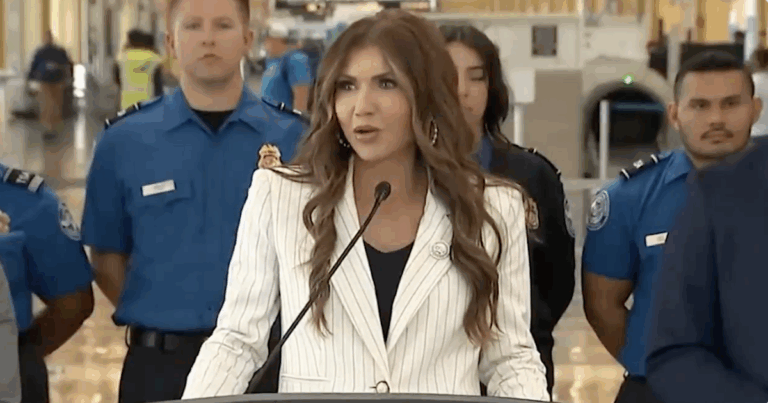
South Dakota Governor Kristi Noem revealed this week that the Transportation Security Administration (TSA) will soon end its decades-old policy requiring passengers to remove their shoes at security checkpoints.

“TSA will no longer require travelers to remove their shoes when they go through our security checkpoints,” Noem announced.

The shoe-removal rule has been in place since 2001, following the attempted shoe bombing by terrorist Richard Reid. Since then, Americans have grown used to the routine: empty your pockets, take off your belt, slip off your shoes, and shuffle through the scanner.

But with new technology and improved screening methods, officials say it’s time for a change.

While full details haven’t been released yet—including when the policy will officially take effect—travelers and lawmakers on both sides of the aisle are likely to applaud the move as a step toward smarter, more efficient security.

Critics have long argued that the shoe rule was outdated and burdensome, especially for families, seniors, and people with disabilities. The change signals a shift in TSA’s approach—balancing safety with a more practical experience for the flying public.

Noem, a vocal supporter of personal freedom and common-sense government, praised the move as long overdue.

As the TSA rolls out these updates, many hope this is just the beginning of broader reforms to make air travel a little less of a headache—and a lot more reasonable.

Trump Suggests Federal Takeover of D.C.: ‘Crime Would Be Down’

0
  • Trump suggests the federal government could take control of Washington, D.C. to reduce crime and improve management.
  • Says D.C. would be run “flawlessly” under federal oversight, with crime “down to a minimal.”
  • Senator Mike Lee backs the idea, pushing the BOWSER Act to repeal D.C.’s home rule and return control to Congress.

President Donald Trump is once again raising eyebrows—this time by suggesting the federal government could take direct control of Washington, D.C., in an effort to tackle crime and improve city management.

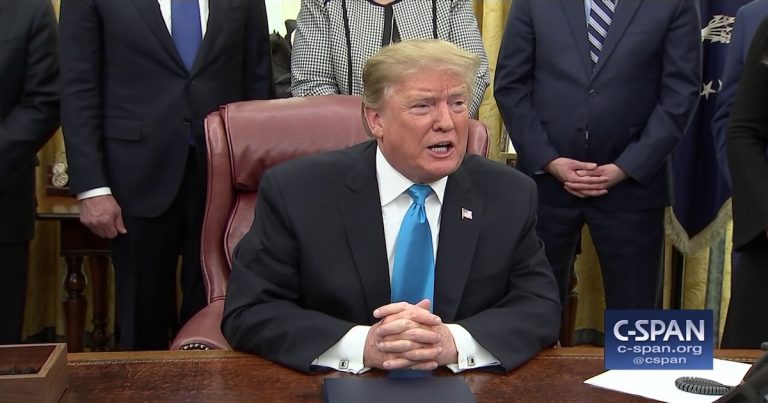
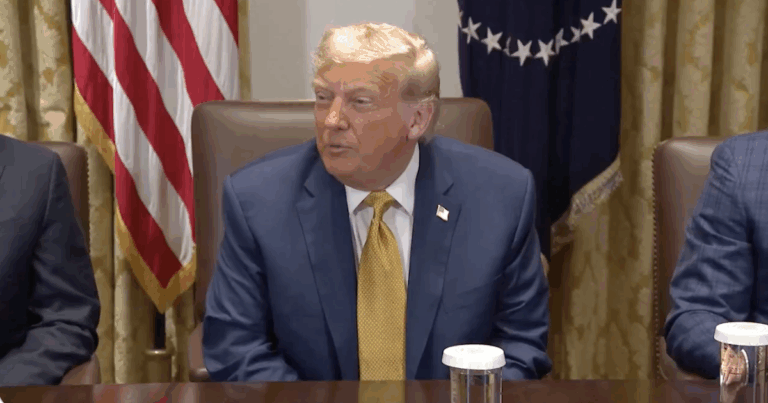
Speaking during a cabinet meeting on Tuesday, Trump said, “We could run D.C. We’re looking at D.C. We don’t want crime in D.C. We want the city to run well.” He added that White House Chief of Staff Susie Wiles is working closely with Mayor Muriel Bowser, but hinted federal control would yield better results:
“We would run it so good, it would be run so proper… the crime would be down to a minimal.”

Trump’s comments come as crime and safety remain hot-button issues in the nation’s capital. According to recent police data, burglaries are down 12% from 2024, but auto theft is slightly up. WalletHub ranked D.C. 172 out of 182 in its 2025 list of “Safest Cities in America.”

Senator Mike Lee (R-UT) responded to Trump’s remarks, calling it time to revisit D.C.’s autonomy. “It’s time to repeal ‘D.C. Home Rule,’ and have D.C.’s laws made by Congress,” Lee posted on X. He promoted the BOWSER Act, introduced with Rep. Andy Ogles (R-TN), which would strip local officials of legislative authority and place D.C. under congressional control—an idea backed by the Constitution.

Trump previously said the federal government “should run [D.C.] with law and order” and make it “absolutely flawless.”

Federal Judge Blocks Trump Admin’s Move to Defund Planned Parenthood

  • Federal judge temporarily blocks Trump’s move to defund Planned Parenthood through Medicaid.
  • Planned Parenthood warns up to 200 clinics could shut down if funding is cut.
  • Pro-life leaders slam ruling as “judicial overreach,” while the case heads to court amid rising national debate.

A federal judge has temporarily blocked a key provision of President Donald Trump’s “Big, Beautiful Bill” that aimed to stop taxpayer dollars from going to Planned Parenthood through Medicaid.

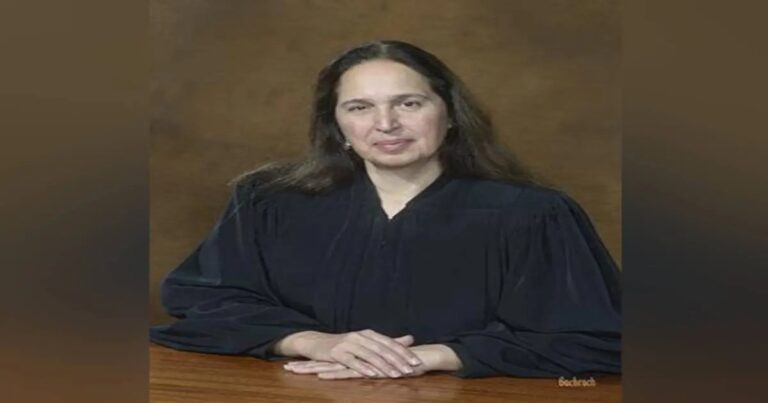
On Monday, U.S. District Judge Indira Talwani, an Obama appointee, issued a Temporary Restraining Order just hours after Planned Parenthood filed a lawsuit. The order puts the provision on hold for 14 days and directs the Department of Health and Human Services to ensure Planned Parenthood continues receiving Medicaid funding during that time.

The lawsuit argues the provision unfairly targets Planned Parenthood, even though the bill doesn’t name the group directly. Because of how the rules are written, Planned Parenthood is currently the only provider affected.

The organization claims that nearly 200 clinics could be at risk of closure if the funding is halted. “Many Planned Parenthood Members will be required to lay off staff and curtail services… Members may be forced to shutter a substantial number of their health centers,” the lawsuit states.

While federal funds cannot legally pay for abortions under the Hyde Amendment—except in rare cases—pro-life advocates argue no taxpayer money should support groups that provide abortions at all.

A White House official responded: “The Trump Administration is ending the forced use of Federal taxpayer dollars to fund or promote elective abortion – a commonsense position that the overwhelming majority of Americans agree with.”

Sen. Mike Lee (R-UT) called the ruling “an abuse of judicial power,” while Rep. Mary Miller (R-IL) said Congress controls the purse—not “activist judges.”

The case—Planned Parenthood Federation of America v. Robert F. Kennedy Jr.—will now proceed through the courts, as the national debate over abortion, Medicaid, and judicial power heats up once again.

Swalwell Pushes Congress to Investigate Weather Service Cuts Post-Flood

  • Rep. Eric Swalwell calls for a congressional probe into whether past NWS budget cuts impacted Texas flood warnings.
  • Emphasizes public safety over politics, urging lawmakers to prioritize early warning systems and emergency preparedness.
  • “No parent should face this,” Swalwell says, stressing accountability as families search for missing loved ones.

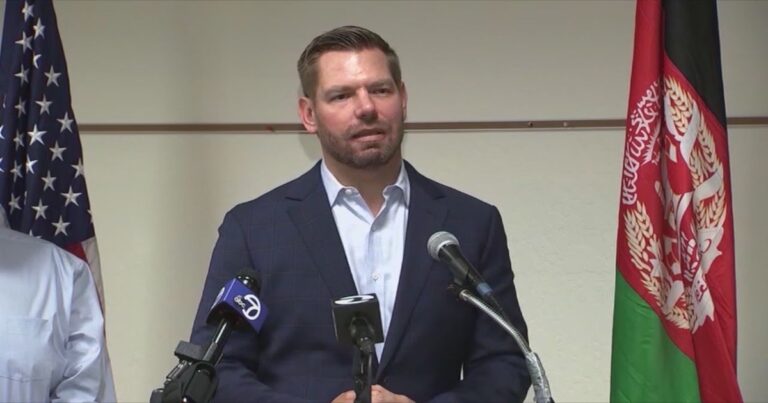
In the wake of the deadly central Texas floods, Rep. Eric Swalwell (D-CA) is calling on Congress to investigate whether past funding cuts to the National Weather Service (NWS) may have impacted early warning systems.

Speaking on CNN’s News Central Tuesday, Swalwell responded to questions about whether the Trump administration’s budget cuts to the NWS played a role in the lack of early alerts during the recent flooding, which left dozens dead and others still missing.

“I do think as lawmakers, we have a responsibility to look at did cuts affect the ability for folks on the ground and at the camp to have an earlier, better warning?” Swalwell said.

While acknowledging the sensitive timing as families continue searching for missing loved ones, Swalwell emphasized that lawmakers must prioritize public safety over partisan battles. “My job is to make sure that we put resources in place to keep people safe,” he said. “Our primary job as lawmakers is the safety of the public.”

He also pushed back on what he described as attacks on public service. “For the last six months, we’ve seen an effort to undermine the hard work of government workers,” he said, pointing to air traffic controllers and FEMA first responders.

Swalwell added, “If there’s a possibility that cuts at that agency affected the safety of those girls, we should understand that.”

Though the statement hints at political tension, Swalwell made it clear this moment is about responsibility and accountability, not blame.

“First and foremost, I’m a parent,” he said. “No parent wants to have to think that this could happen when their kid goes to camp.”

Both sides of the aisle will likely face pressure to take a serious look at future NWS funding.

2 Officers Ambushed Near Texas Immigration Facility

0
  • Two targeted attacks in Texas left local officers shot near federal immigration facilities in McAllen and Alvarado within days of each other.
  • In McAllen, a shooter fired dozens of rounds at a Border Patrol building before being killed by agents; one officer was injured in the knee.
  • Violence against ICE and Border Patrol is surging, with attacks up over 500% in recent months, sparking multi-agency investigations.

The Center Square reports:

As Border Patrol agents and federal immigration officers continue to be targeted for violence, two targeted attacks occurred in Texas within a few days, resulting in local police officers being shot.

The first shooting took place south of Ft. Worth, the second in the border town of McAllen.

On Monday morning, a McAllen police officer was shot responding to an active shooter targeting the U.S. Customs and Border Protection Rio Grande Valley Sector Border Patrol annex located next to the McAllen Airport.

McAllen Police Chief Victor Rodriguez said a police officer and Border Patrol agents “engaged the suspect that had opened fire upon that building and upon those agents that were in the building.” A 10-year veteran of the police force who responded to the scene, Ismael Garcia, “was struck by a round,” Rodriguez said at a news conference. “He got hit in the knee. He is going to be fine. He’s going through a recovery process and treatment … at a local hospital.”

Rodriguez tentatively identified the shooter as 27-year-old Michigan resident Ryan Louis Mosqueda.

He fired “many, many, many dozens of rounds … towards the building and towards agents in that building,” Rodriguez said. He was killed “on scene as a result of taking fire from Border Patrol agents.”

Mosqueda arrived in Texas in a vehicle with Michigan tags and was connected to an address in Weslaco. He was reported missing at 4 a.m. by someone in the residence, Rodriguez said. One hour later, he was shooting at the station and shot dead.

Mosqueda doesn’t appear to have a criminal record. Authorities don’t believe there are any more associated threats and don’t have a motive for the shooting, Rodriguez said.

They found “much more ammunition and other weaponry that [he] brought with him” in his vehicle, he said. The phrase, “Cordis Die,” was spray painted on it, meaning “Call of Duty.” It’s unclear what the phrase has if anything to do with the shooting, Rodriguez said.

The U.S. Department of Homeland Security issued a statement confirming the shooting, stating that “Two officers and a Border Patrol employee were injured, including one shot in the knee. All three have gone to the hospital. This is an ongoing investigation led by the FBI.” However, no federal agents were physically injured, Rodriguez said.

“The world is much smaller than we think,” Rodriguez told reporters. “The threats are always looming. They are always present and incidents like these make us realize that we’ve always got to be on guard and keep our community safe.”

The response was a collaborate effort where local, state and federal law enforcement officers worked seamlessly together, he said. The FBI is taking the lead on a multi-agency investigation.

Just days earlier, on July 4, multiple suspects fired on a police officer, striking the officer in the neck, during an active shooter incident outside of a U.S. Immigration and Customs Enforcement detention facility in Alvarado, in Johnson County, roughly 27 miles south of Ft. Worth.

Just before 11 p.m., an Alvarado Police Department officer was dispatched to the 1200 block of Sunflower Lane in response to a suspicious persons call. Once on scene, the officer observed a suspicious person who appeared to be carrying a firearm, the APD said. “As the first responding officer attempted to engage the person, multiple suspects opened fire” on the officer, striking the officer in the neck “by at least one bullet,” the APD said. The officer was flown to Harris Methodist Hospital in Ft. Worth, treated and released.

The suspects attempted to flee but were caught by APD officers, Johnson County Sheriff’s deputies and neighboring agencies who “took several armed suspects into custody,” the APD said. The motives of the suspects remain unclear.

Multiple law enforcement agencies, including the Texas Rangers and federal law enforcement, are involved in an ongoing investigation. Anyone with information about the incident is asked to contact the APD’s criminal investigations division at 817-790-0910.

The targeted shooting incidents occurred after attacks against ICE officers have increased by more than 500% in the last few months, The Center Square reported.

New Executive Order Pushes Tariffs Further Down the Road

0
  • Trump delays new tariffs again, pushing the start date to August 1—just days before the original deadline.
  • Countries that reach trade deals with the U.S. can avoid higher rates, while a 10% universal tariff remains in effect.
  • Trump calls it “Liberation Day,” aiming to end decades of unfair trade and bring American jobs back home.

The Center Square reports:

In a late-afternoon executive order Monday, President Donald Trump postponed the reciprocal tariffs he announced on April 2 for a second time, to Aug. 1. The pause was announced less than 48 hours before the original 90-day extension was set to expire.

On April 2, the president announced new, higher tariffs that the U.S. was going to impose on many of its trading partners. One week later, Trump announced that he would be suspending enforcement of those tariff rates for 90 days, until July 9, to give countries time to negotiate new, mutually beneficial trade deals with the U.S. In the meantime, he instituted a universal 10% tariff on most goods from foreign countries. Countries that were able to negotiate a new trade deal with the U.S. could avoid their higher tariff rate on most goods that Trump had announced on April 2.

On Monday, Trump sent personal letters to 14 countries informing them that he would postpone the effective date for their tariffs to Aug. 1. Hours later came the executive order pushing back the July 9 deadline for all countries that had not yet reached a deal.

“I have determined, based on additional information and recommendations from various senior officials, including information of the status of discussions with trading partners, that it is necessary and appropriate to extend the suspension… until 12:01 a.m. eastern daylight time on August 1, 2025,” Trump said.

The tariff arrangements previously negotiated with China will remain in effect.

Since April 2, the administration has signed a trade deal with the U.K. and announced a trade deal with Vietnam on July 2. Others are reportedly in the works.

Trump originally dubbed April 2 “Liberation Day,” as he believes the U.S. has been hamstrung by unfair trade practices other countries have imposed on the U.S. for decades. Many of America’s trading partners have imposed high tariffs on American goods, when America’s tariffs on those partners have remained relatively low. These and other trade barriers have been “ripping off” the U.S. and have caused the outsourcing of American jobs, according to Trump. By instituting higher tariffs or negotiating new trade deals, Trump aims to reshore manufacturing jobs and restore economic fairness.

Trump Cracks Down on CCP Land Grabs, Targets Ag Security Threats

  • Trump admin unveils bold plan to block foreign control of U.S. farmland—including banning Chinese land buys and reclaiming land near military sites.
  • Hundreds of foreign nationals and entities to be removed from USDA contracts amid biosecurity and agroterrorism concerns.
  • Multi-agency push boosts food supply protection, research integrity, and supply chain security—with bipartisan backing.

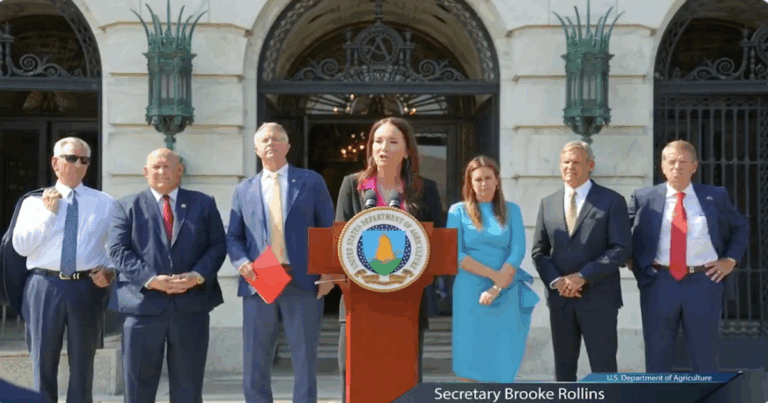
The Trump administration has announced a sweeping new effort to protect American agriculture from foreign influence—especially from adversaries like China. The National Farm Security Action Plan, unveiled Tuesday by Agriculture Secretary Brooke Rollins alongside other top officials, targets land ownership, research infiltration, and food supply threats.

“American agriculture is not just about feeding our families, but about protecting our nation,” Rollins said. The plan includes a ban on Chinese nationals buying U.S. farmland, with steps to “claw back” land already purchased near sensitive military sites.

Rollins also confirmed at least 700 foreign nationals from “countries of concern” will be removed from USDA contracts and research, and over 550 entities are set to lose access as well. This follows recent arrests of Chinese researchers accused of smuggling crop-killing fungi and biological materials into the U.S.

Attorney General Pam Bondi confirmed, “It’s going to stop… We will prosecute you. We will hold you accountable.”

The plan also strengthens penalties under the Agricultural Foreign Investment Disclosure Act, expands SNAP fraud investigations, and enhances supply chain security. The USDA will now collaborate with DARPA to ensure U.S. agricultural research remains American-led.

White House trade adviser Peter Navarro warned, “We are indeed in a new world where kinetic warfare is not the first choice… it’s things like stealing seeds and spying from farmland.”

Rollins emphasized bipartisan cooperation: “Ultimately, we’re all in this to protect our country.”

The Trump administration’s multi-agency effort aims to restore food security, research integrity, and bring agriculture back under American control—a move leaders hope will receive support on both sides of the aisle.

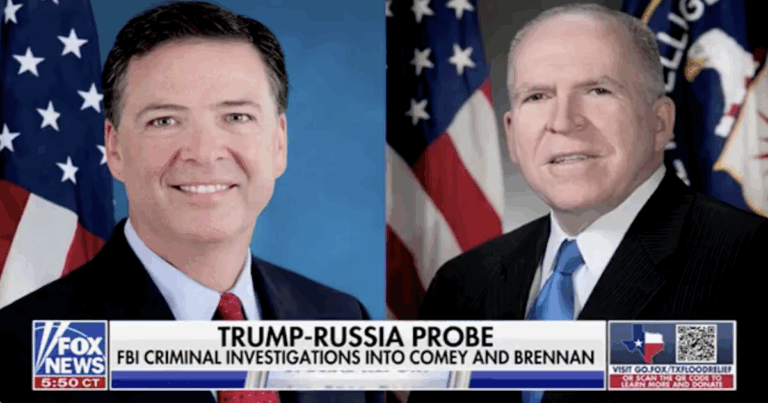
From Investigators to Investigated: Brennan and Comey in the Hot Seat

0
  • Brennan and Comey now under criminal investigation tied to the Trump-Russia probe origins.
  • FBI reviewing possible “conspiracy” after referral from CIA Director John Ratcliffe.
  • Spotlight shifts to the investigators, as questions of accountability gain new traction.

Former CIA Director John Brennan and former FBI Director James Comey are now under criminal investigation, according to a report from Fox News. The investigation centers around their roles in the controversial Trump-Russia probe.

Fox News reports, “CIA Director John Ratcliffe referred evidence of wrongdoing by Brennan to FBI Director Kash Patel for potential prosecution.”

While the full details of the investigation haven’t been made public, sources say the FBI is examining the actions of Brennan and Comey as potentially part of a larger “conspiracy.” If that’s accurate, it could open the door to a wide range of criminal charges.

Both Brennan and Comey played key roles in the early stages of the Trump-Russia investigation during the Obama administration, which later led to the Mueller probe. Many conservatives have long questioned whether the investigation into Trump’s 2016 campaign was politically motivated or based on flawed intelligence.

This latest development may breathe new life into those concerns, but it’s also raising serious questions across the political spectrum about transparency and accountability within the intelligence community.

The Justice Department has not released an official statement, and it remains to be seen whether charges will follow. For now, the investigations are ongoing, and Americans on both sides of the aisle are watching closely.

One thing is clear—those who led the charge into the Trump-Russia probe are now facing serious scrutiny of their own.