Monday, January 26, 2026
No menu items!
Home Blog Page 14

World Leaders Rally Behind Trump’s Vision for Peace in Gaza

Key Takeaways:

  • Global Consensus on Trump’s Leadership: Nations across the political spectrum—from Saudi Arabia to Canada—are praising President Trump’s Gaza peace plan as a serious, credible path toward ending years of bloodshed.
  • A Plan Rooted in Strength and Diplomacy: The proposal calls for an immediate ceasefire, release of all hostages, and a sweeping reconstruction plan to rebuild Gaza into a stable, self-sufficient region.
  • America Back in Command: After years of weak diplomacy, Trump’s decisive leadership has restored America’s global influence and united former rivals in pursuit of peace, security, and prosperity in the Middle East.

President Donald J. Trump’s bold peace plan for Gaza is being hailed across the globe as a turning point after years of war and suffering. The plan calls for an immediate end to hostilities, the full release of all hostages, large-scale humanitarian relief, and a long-term rebuilding effort aimed at turning Gaza into a model of peace and prosperity.

What sets this initiative apart is its sweeping international support. From the Arab world to Western allies, nations are praising Trump’s leadership and the plan’s practicality. In a joint statement, foreign ministers from Qatar, Jordan, the UAE, Indonesia, Pakistan, Türkiye, Saudi Arabia, and Egypt expressed “confidence in his ability to find a path to peace” and welcomed his pledge to rebuild Gaza while preventing displacement of the Palestinian people.

The leaders declared, “The Foreign Ministers of the State of Qatar, the Hashemite Kingdom of Jordan, the United Arab Emirates, the Republic of Indonesia, the Islamic Republic of Pakistan, the Republic of Türkiye, the Kingdom of Saudi Arabia, and the Arab Republic of Egypt welcome President Donald J. Trump’s leadership and his sincere efforts to end the war in Gaza, and assert their confidence in his ability to find a path to peace. They emphasize the importance of the partnership with the United States in securing peace in the region. Along these lines, the ministers welcome the announcement by President Trump regarding his proposal to end the war, rebuild Gaza, prevent the displacement of the Palestinian people and advance a comprehensive peace, as well as his announcement that he will not allow the annexation of the West Bank.”

Their joint statement added, “The ministers affirm their readiness to engage positively and constructively with the United States and the parties toward finalizing the agreement and ensuring its implementation, in a manner that ensures peace, security, and stability for the peoples of the region.”

Leaders from Australia, India, Italy, France, the United Kingdom, and many others have echoed similar support, describing the plan as historic, realistic, and urgently needed. Even long-standing critics of U.S. involvement in the region, such as China and Turkey, have publicly praised the proposal as a step toward lasting stability.

Trump’s plan goes beyond politics—it reflects a belief in American leadership and the power of diplomacy driven by strength and vision. While bureaucrats and career diplomats have talked for decades, Trump’s action-oriented approach has united the international community in rare agreement. If fully realized, it could mark not just the end of a war, but the beginning of a new era of peace, prosperity, and partnership in the Middle East.

All 50 States Brace for Financial Fallout from Democrat Standoff

0

Key Takeaways:

  • Nationwide Economic Impact: The Council of Economic Advisers warns the shutdown could cost the U.S. 15 billion dollars in GDP each week, with job losses and spending declines in every state.
  • Families on the Line: Critical programs like WIC and SNAP are at risk, threatening millions of women and children who rely on these benefits for daily essentials.
  • Free Market, Not Free Handouts: The shutdown shows the danger of reckless spending and political brinkmanship. Real growth comes from fiscal responsibility, private enterprise, and empowering workers—not funding giveaways for illegal immigrants.

As Democrats push their plan to fund free healthcare for illegal immigrants, they are holding the government—and the American people—hostage. According to the Council of Economic Advisers, the United States could lose 15 billion dollars in GDP each week the shutdown continues. This is not some distant problem in Washington. Every single state will feel the hit.

New data paints a grim picture. All 50 states face job losses, stalled consumer spending, and major disruptions to programs like WIC and SNAP. If the shutdown lasts a month, more than 43,000 Americans could lose their jobs, with California, Texas, and New York among the hardest hit. Families depending on WIC and SNAP could see benefits frozen, including nearly 800,000 women and children in Texas alone.

Consumer spending is expected to collapse as workers lose paychecks and federal contracts dry up. Florida could see 1.7 billion dollars in lost spending per month, while Virginia faces a staggering 3.6 billion dollar drop. State economies are shrinking too, with California losing 2.1 billion dollars in gross state product every week and Texas close behind at 1.4 billion.

This isn’t fiscal discipline—it’s economic sabotage. Democrats are gambling with American livelihoods to score political points. The better path is clear: stop the reckless shutdown, restore fiscal responsibility, and let the free market—not big government—lead the way toward growth, stability, and prosperity for working Americans.

Costco Slims Down Prices: Weight-loss Drugs Now Half Off for Members

0

Key Takeaways:

  • Free-Market Health Care: Costco’s partnership with Novo Nordisk shows that competition and consumer demand (not government intervention) can make life-changing medicine more affordable.
  • Smart Business, Real Results: With Wegovy and Ozempic available for $499 per month, Costco members gain access to cutting-edge treatments while Novo Nordisk expands its reach in the booming GLP-1 market.
  • Capitalism Delivers: This deal proves American enterprise can do what bureaucrats can’t: make quality care accessible, affordable, and efficient for millions of everyday consumers.

In true free-market fashion, Costco is proving once again that capitalism can make America healthier without Washington’s meddling. The warehouse giant is partnering with pharmaceutical powerhouse Novo Nordisk to offer its members access to weight-loss and diabetes medications Wegovy and Ozempic at roughly half price — just $499 for a four-week supply through the Costco Member Prescription Program.

How it works: As a GLP-1 receptor agonist, Ozempic mimics the function of a natural hormone in the body. This mechanism works in three main ways to help manage diabetes: 

  1. Slows digestion: It slows down how quickly food leaves your stomach, which helps control appetite and blood sugar spikes after meals.
  2. Boosts insulin: It helps the pancreas produce more insulin when blood sugar levels are high.
  3. Lowers sugar production: It prevents the liver from making and releasing too much sugar.

“Our collaboration with Costco is another step forward… in making real Wegovy® and Ozempic® easier to access and afford – right where people already shop,” said Dave Moore, Executive Vice President of Novo Nordisk U.S. Operations. He added that the move makes “care simple, reliable, and within reach.”

This partnership is a case study in how competition, not bureaucracy, drives accessibility. By using Costco’s massive distribution network and loyal membership base, Novo Nordisk is meeting demand while bypassing insurance red tape. Costco Executive Members and Citi Visa cardholders even get extra discounts — because in America, loyalty pays.

Novo Nordisk, which produces half the world’s insulin, has been leading the charge in diabetes and obesity care. With the explosion in GLP-1 medications, the company’s alliance with a trusted retailer like Costco is both smart business and sound health policy — the kind that doesn’t need a government mandate to work.

When free enterprise meets consumer demand, everybody wins — slimmer waistlines, stronger markets, and a healthier, freer America.

Make America Healthy Again—Walmart Just Answered the Call

0

Key Takeaways:

  • Free Market Leadership: Walmart’s reform is proof that consumer demand and pro-health policy incentives — not federal overreach — can move the private sector toward cleaner, safer food production.
  • Trump’s Health Agenda Delivers: The “Make America Healthy Again” initiative is driving results, as major brands align with efforts to reduce chemical additives and prioritize public well-being through voluntary reform.
  • Industry-Wide Ripple Effect: As America’s largest grocer, Walmart’s decision will pressure competitors and suppliers to follow suit, setting a new standard for transparency and quality in the food marketplace.

In a standout moment for American enterprise, Walmart (WMT.N) announced Wednesday it will phase out synthetic dyes from its U.S. private-label foods — including its Great Value and bettergoods lines — by January 2027. This isn’t government coercion; it’s a market-driven response to consumer demand and patriotic pressure from the Trump administration’s “Make America Healthy Again” agenda.

Big names like PepsiCo, Campbell’s, and Conagra have already jumped on board, signaling that when Washington raises the banner of public health, entrepreneurs respond. Health Secretary Robert F. Kennedy Jr. is targeting ultra-processed foods and chemical additives, citing a national emergency of childhood obesity, diabetes, cancer, allergies, and neurodevelopmental conditions. Whether you agree with every claim or not, the message is clear: the risks of synthetic ingredients are now a business reality.

Walmart isn’t stopping with dyes. The retailer plans to dump more than 30 additional ingredients, from preservatives to artificial sweeteners, in its private-label lineup. “Our customers have told us that they want products made with simpler, more familiar ingredients — and we’ve listened,” said Walmart U.S. president John Furner. With 90 percent of Walmart’s private-brand foods already synthetic dye-free, the transition is largely evolutionary.

To achieve this, Walmart is swapping in natural colorants like beet root, turmeric, spinach, and hibiscus. For example, in its orange gelatin products Walmart will drop Yellow #6 and Red #40 in favor of beta-carotene. For cherry items, the company will use blends of carrot, radish, hibiscus, blueberry, and spirulina instead of the usual Red #40 and Blue #1.

These changes won’t happen overnight. Walmart is collaborating with private suppliers to reformulate everything — from cereals and frozen meals to canned goods and salads. Brian Ronholm, director of food policy at Consumer Reports, concedes the move could reshape the entire industry: “As the leading grocer in the U.S., this move will have a significant impact on the market and the safety of the food that so many Americans purchase.”

Mind you, this is free enterprise in action — not regulatory overreach. Walmart’s sister chain, Sam’s Club, already pledged to remove artificial colors and aspartame from its Member’s Mark products by year’s end.

Here’s the takeaway for freedom-minded entrepreneurs and business leaders: When consumers demand healthier options, savvy companies will deliver — without heavy-handed mandates. Walmart’s leadership shows that American businesses can rise to national challenges, preserve margins, and protect liberty at the same time.

Trump Secures Historic Drug Pricing Deal With Pfizer

Key Takeaways

  • Lower Prices for Patients: Under the Pfizer deal, Americans will now pay most-favored-nation prices — the lowest rates paid in any developed nation — with discounts of up to 80% on key medicines.
  • Ending Global Free Riding: For decades, foreign countries enjoyed cheaper drugs while U.S. patients footed the bill. Trump’s deal forces Big Pharma to stop subsidizing socialism abroad and start putting Americans first.
  • America First Economics: By repatriating profits and leveraging trade policy, Trump is delivering real savings to taxpayers, strengthening Medicaid, and proving that tough negotiations can put patients over politics.

President Donald J. Trump just scored another win for American patients — this time against Big Pharma’s global price games. On Wednesday, Trump announced the first-ever deal with Pfizer to bring U.S. drug costs in line with the lowest paid by other developed nations, a policy known as most-favored-nation (MFN) pricing.

For decades, Americans have been stuck paying triple the price of brand-name drugs compared to other wealthy nations — effectively subsidizing Europe’s socialist health systems. “In case after case, our citizens pay massively higher prices than other nations pay for the same exact pill,” Trump said. “Four times, five times different.” That ends now.

The Pfizer agreement delivers MFN pricing to every state Medicaid program, saving taxpayers millions while strengthening care for the most vulnerable. More importantly, it requires Pfizer to repatriate profits boosted by Trump’s tough trade policies and pass those gains on to American patients.

The savings are real and immediate. Eucrisa, a topical ointment for dermatitis, will be offered at an 80% discount. Xeljanz, used for arthritis and colitis, will come at 40% off. Zavzpret, a popular migraine treatment, will sell at 50% off. Millions of Americans will feel the difference.

For too long, U.S. innovation funded the world while Americans picked up the tab. With this deal, Trump is rebalancing the system — forcing Big Pharma to stop freeloading abroad and start delivering fair prices at home.

This is America First economics in action: protecting innovation, cutting costs, and putting patients — not bureaucrats or foreign governments — at the center of healthcare.

Record Beef Prices Expose Decades-Low Cattle Supply

0

Key Takeaways

  • Supply Squeeze: America’s cattle herd is at its lowest level since 1951 due to years of drought, pushing beef prices to record highs.
  • Cost Pressures: Ranchers are battling soaring expenses for feed, fuel, and equipment, while tariffs and import bans tighten supply chains further.
  • Pro-Growth Policies Matter: Industry leaders say higher beef prices, paired with Trump’s tax relief, are helping ranchers reinvest and keep America’s beef industry strong despite lingering Biden-era regulatory burdens.

Beef prices just hit record highs — and the story isn’t just about your grocery bill. It’s about what happens when drought, global trade disruptions, and government policy collide.

According to the Bureau of Labor Statistics, ground beef is up 12.8% year-over-year, roasts up 13.6%, and steaks a sizzling 16.6% higher. That’s far above the 3.2% overall food inflation rate. Translation: the cookout just got a lot more expensive.

Ranchers know exactly why. “We’ve got the lowest cow inventory since 1951, so that’s the cause of this,” said Illinois cattle rancher Mike Martz, pointing to droughts that wiped out grazing land across Texas, Oklahoma, Kansas, and the Southeast. When ranchers lose forage, they liquidate herds — and rebuilding takes years.

At the same time, overhead costs for ranchers — feed, fuel, labor, equipment — keep climbing. Imports can’t fill the gap either. Mexico’s shipments were halted after a cattle parasite outbreak, and beef from Brazil faces a steep 76% tariff.

That’s why Trump’s policies matter. As Martz explained, tariffs can weigh on crop prices even as cattle prices rise, leaving family operations struggling to balance the books. “The cattle are making money, the crops are going to lose money. So, hopefully we can average that together, but we need some support,” he said.

Colin Woodall of the National Cattlemen’s Beef Association noted that higher prices are finally giving ranchers breathing room after years of Biden-era red tape. And with tax relief from Trump’s One Big Beautiful Bill, farmers have the tools they need to reinvest, modernize, and keep delivering the best beef in the world.

Funding Cuts and Rising Costs: Insurers Scale Back Senior Plans

0

Key Takeaways

  • Cuts Hit Seniors Hard: UnitedHealth, Humana, and CVS are pulling back Medicare Advantage plans in 2026, affecting hundreds of thousands of seniors across dozens of states.
  • Washington to Blame: Insurers cite Biden-era reimbursement cuts, rising healthcare costs, and higher utilization as reasons for leaving markets once considered stable.
  • Fewer Options Ahead: With major insurers exiting counties and states, seniors will face shrinking choices and disrupted coverage, proving again that government meddling comes with a price.

America’s seniors are about to feel the pinch. Three of the nation’s biggest health insurers — UnitedHealth, Humana, and CVS Health’s Aetna — announced they will scale back Medicare Advantage offerings in 2026, blaming Washington’s funding cuts and rising healthcare costs.

Medicare Advantage, the privately-run alternative to traditional Medicare, has been a lifeline for millions of seniors who want more choice and better value. But since 2024, the federal government has slashed reimbursements, leaving insurers with fewer resources to serve patients. The result: fewer plan options, reduced coverage areas, and hundreds of thousands of seniors forced to shop for new plans.

UnitedHealth will exit 109 counties, cutting coverage for about 180,000 people. Humana will trim its footprint from 89% of counties to 85%, and Aetna is pulling prescription drug plans out of 100 counties. UnitedHealth’s Bobby Hunter didn’t sugarcoat it: “The combination of CMS funding cuts, rising healthcare costs and increased utilization have created headwinds that no organization can ignore.”

The numbers are stark. Humana will now operate in 46 states instead of 48. Aetna is down to 43 states and 2,159 counties. UnitedHealth’s shutdown of over 100 plans will affect roughly 600,000 members, many of whom value flexibility to see providers outside rigid networks.

While insurers are trying to soften the blow — Humana with new plan types and lower premiums, CVS expanding dual-eligibility offerings — the message is clear: government meddling in Medicare markets has consequences.

America’s seniors deserve stability, choice, and affordability — not fewer options created by Washington’s obsession with cutting corners instead of reforming costs.

Shutdown Economics: What Happens When Washington Plays Chicken

0

Key Takeaways

  • Massive Economic Hit: Each week of shutdown costs the U.S. economy about $15 billion and risks tens of thousands of jobs — proof gridlock has real consequences.
  • Families and Businesses Squeezed: Small business loans stall, airport delays mount, and seniors face longer Social Security and Medicare wait times as Washington plays politics.
  • Spending Discipline Needed: The Trump administration is right — America can’t afford endless bloated budgets. Shutdowns highlight the urgent need for fiscal responsibility and pro-growth reform.

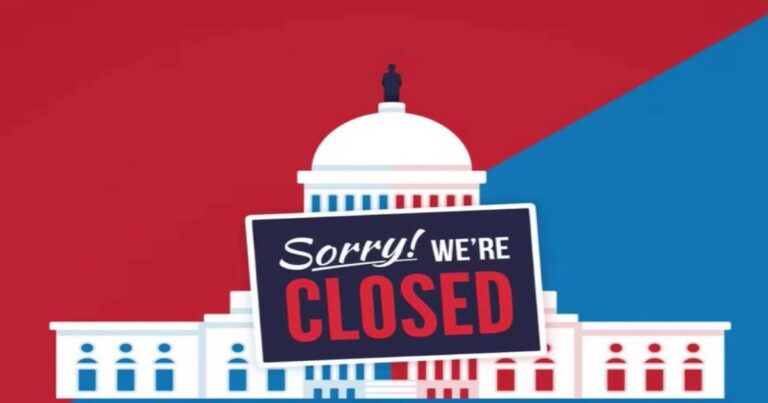
Once again, Washington gridlock is dragging America into a partial government shutdown — and the consequences aren’t just political theater. When Congress fails to pass spending bills or a continuing resolution (CR), the lights start to go out across federal agencies, with ripple effects hitting families, businesses, and markets.

CRs are nothing new. In fact, they’re one of the most basic tools Congress uses to keep government running while negotiations continue. Both parties have supported them in the past. But when Democrats insist on larding up stopgap funding with big-ticket subsidies and handouts, Republicans are right to draw a line. Fiscal responsibility still matters.

The numbers are real: Goldman Sachs estimates each week of shutdown knocks 0.2% off quarterly GDP — about $15 billion. Stretch that out for a month and the economy could lose 43,000 jobs. Consumer spending takes a hit, small business loans are delayed, and federal contracts — worth $15 billion a week, with $3 billion earmarked for small businesses — get put on ice. That’s cash flow Main Street counts on.

Airports also feel the squeeze. TSA and air traffic controllers are forced to work without pay, which historically has led to absenteeism and cascading flight delays. Border Patrol, Coast Guard, and federal law enforcement continue on duty without paychecks. Meanwhile, millions of federal contractors don’t get back pay at all, meaning permanent losses for families who did nothing wrong except rely on Washington.

Programs like WIC and Head Start risk running out of funds, while Social Security and Medicare face longer wait times for already-stressed seniors. The bottom line: the longer the shutdown drags on, the deeper the pain across the economy.

Here’s the hard truth: America can’t keep living off bloated budgets and last-minute standoffs. Every shutdown is a reminder that Washington has a spending addiction. The Trump administration is right — it’s time for real fiscal discipline, streamlined government, and policies that put American growth and security ahead of partisan games.

‘Schumer Shutdown’ Begins as GOP Defends Taxpayers Against Left’s Wish List

0

Key Takeaways

  • Democrats to Blame: A clean GOP continuing resolution would have kept the government open, but Democrats demanded $1 trillion in new spending and Obamacare subsidies, choosing shutdown instead.
  • Republicans Stand Firm: President Trump and Senate GOP leaders stressed they will not allow the government to be held hostage to Schumer’s progressive agenda.
  • Real-World Impact: The shutdown brings furloughs, agency closures, and suspended pay for service members, while lawmakers keep collecting checks — a reminder of Washington’s broken priorities.

At the stroke of midnight, Washington hit the brakes. The federal government is now in a partial shutdown after Democrats tanked a clean continuing resolution (CR) that would have kept government running through November 21. The reason? Senate Minority Leader Chuck Schumer’s caucus demanded over $1 trillion in new spending, including extended Obamacare subsidies, instead of keeping the lights on.

House Republicans passed their CR weeks ago, offering stability and time to hammer out FY 2026 priorities. But Senate Democrats blocked it, furious at being “sidelined,” and now thousands of federal workers face furloughs while agencies shutter. The Labor Department, parks, even the Library of Congress will feel the pinch. Active-duty service members won’t get paid, but lawmakers will — proof again of Washington’s upside-down priorities.

Senate Majority Leader John Thune cut through the noise: “There isn’t any substantive reason why there ought to be a government shutdown… But we are not going to be held hostage for over $1 trillion in new spending on a continuing resolution.”

President Trump was blunt, warning Democrats that Republicans hold leverage: “We can do things during the shutdown that are irreversible, that are bad for them and irreversible by them, like cutting vast numbers of people out, cutting things that they like, cutting programs that they like.”

Only three Democrats broke ranks to move the GOP resolution forward: Sen. Catherine Cortez Masto of Nevada (yes, she’s in their leadership), Sen. John Fetterman of Pennsylvania, and Sen. Angus King of Maine, the so-called “independent” who always caucuses with the Democrats.

OMB Director Russ Vought ordered agencies to execute “orderly shutdown activities” and reminded staff that Democrats’ “untenable posture” makes the duration unpredictable.

While Democrats cry foul, let’s be clear: Republicans didn’t want this shutdown. A CR is a routine step — one Democrats themselves have passed 13 times when in power. This crisis exists because the Left would rather gamble with America’s stability than give up their bloated, big-government spending spree.

For taxpayers, the lesson is obvious: America doesn’t need more Washington waste. It needs fiscal sanity, economic sovereignty, and leaders willing to fight for them. That’s exactly what the Trump administration is delivering.